Predictive Maintenance with Machine Learning: From Sensor Data to Early Warnings
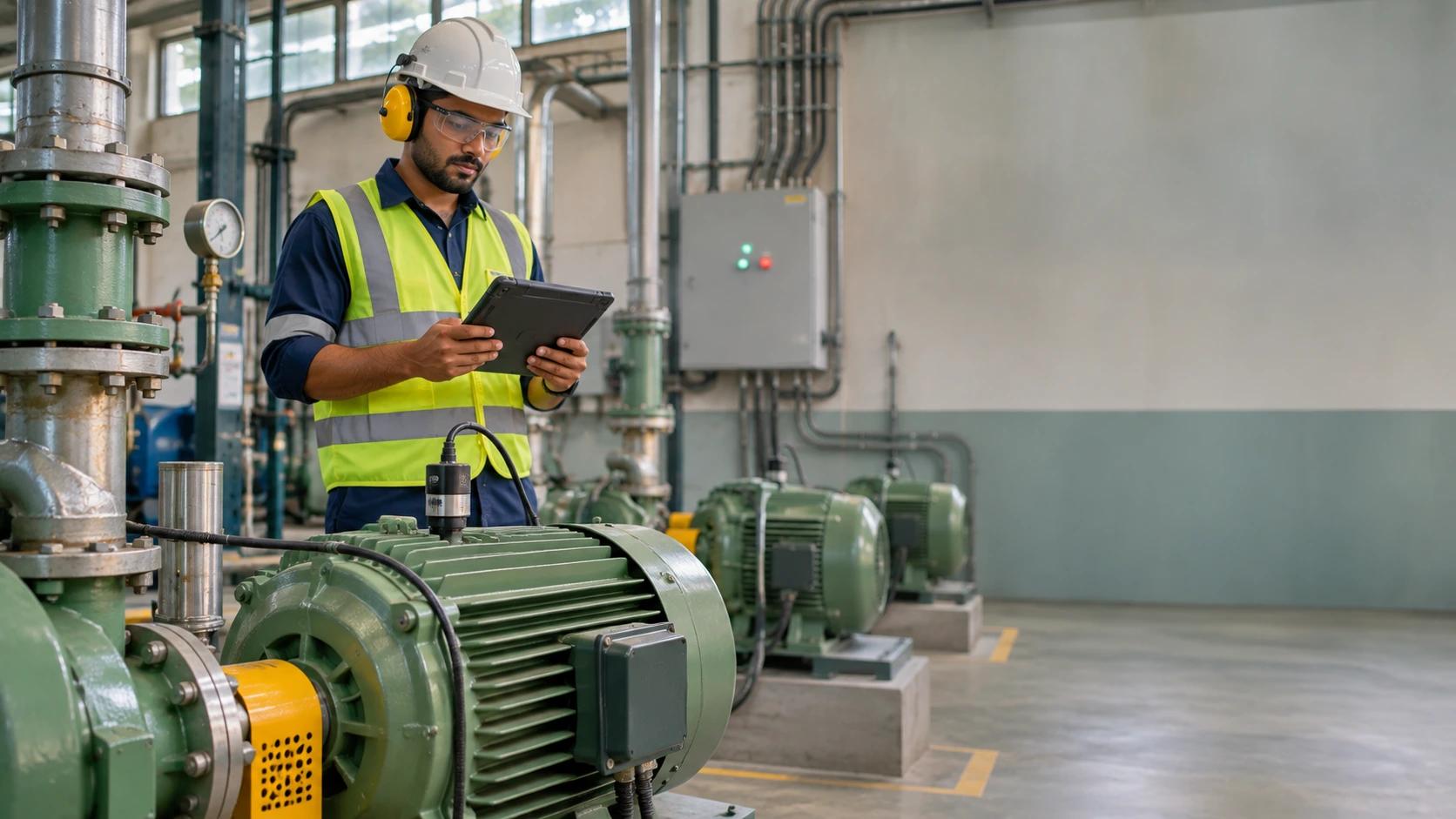
How machine learning analyses equipment sensor data to identify early warning signs, estimate potential failures and help industrial teams plan maintenance before breakdowns occur.
Short answer
Predictive maintenance with machine learning uses historical and live equipment sensor data—such as vibration, temperature, motor current and pressure—to identify unusual patterns associated with developing faults. Models estimate failure risk or remaining useful life and raise early warnings so maintenance teams can investigate and plan repairs before a breakdown. Predictions support decisions; engineers still validate evidence and approve interventions.
DEQX Editorial Team
01 / Understanding predictive maintenance
How does predictive maintenance work with machine learning?
Predictive maintenance bases repair and inspection decisions on observed equipment behaviour and estimated risk, rather than waiting for a failure or following only a fixed calendar. Machine learning finds patterns in sensor streams and maintenance history that are hard to spot across many assets and shifts. For example, rising vibration, bearing-housing temperature and motor current on a circulating pump can signal developing bearing wear—prompting an early warning for an engineer to review, inspect and schedule work.
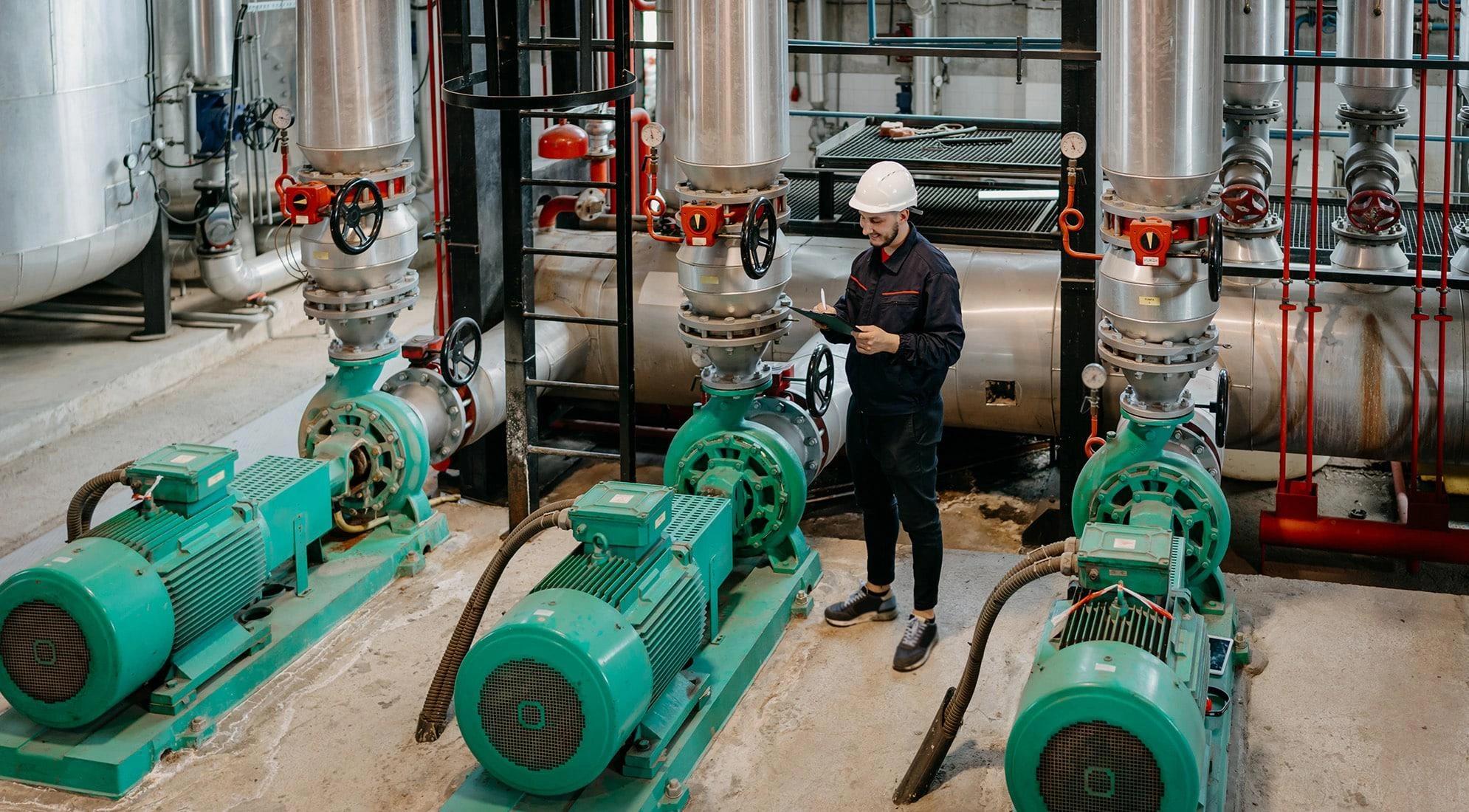
01Start from equipment condition
Use live and historical signals to judge risk, rather than assuming every asset wears at the same rate.
02Use machine learning to surface patterns
Models compare current behaviour with historical baselines for similar loads and duty cycles.
03Hand the warning to engineers
Maintenance teams investigate supporting evidence and decide whether, when and how to intervene.
A clear comparison
Reactive, preventive and predictive maintenance.
Use a concise comparison rather than treating these as competing slogans. Many plants combine all three, depending on asset criticality and data readiness.
AFTER FAILURE
Reactive maintenance
Equipment is repaired only after it fails. Production stops, spare parts may be unavailable and work is done under urgency. Useful for low-criticality assets; costly where downtime disrupts output or safety.
BY SCHEDULE
Preventive maintenance
Work follows predetermined operating hours or calendar intervals. This reduces surprise failures for many assets, but fixed schedules do not always match actual condition—parts may be replaced too early, or wear may progress faster than the plan assumes.
BY CONDITION AND RISK
Predictive maintenance
Decisions draw on observed equipment condition and predicted risk. Teams still need ownership, spare-part readiness and a maintenance window; the aim is earlier, better-informed intervention—not autonomous repair.
02 / Sensor data and machine learning
What sensor data helps predict equipment failures?
Industrial Internet of Things (IIoT) sensors and existing machine signals describe how equipment is running. Machine learning compares incoming readings with historical behaviour for the same asset class, load and duty cycle. Useful signals include vibration, temperature, acoustics, motor current, pressure, flow, speed and operating hours—indicators of possible wear, overheating, load change, leakage or mechanical faults, not definitive diagnoses. Some deployments use motor current signature analysis (MCSA) with machine learning on electrical supply data, without sensors on every machine, specific claims belong to the vendor.

01Collect equipment condition data
Sensors, PLC tags, historian logs and work-order records provide operating context. Missing readings, inconsistent asset names and incomplete failure history limit what any model can learn.
02Identify abnormal patterns
Models compare live behaviour with historical baselines to detect anomalies—unusual combinations of signals relative to known healthy operation—or classify patterns linked to known fault modes.
03Generate early warnings
Detected patterns become alerts or recommendations for maintenance teams. A useful warning states which asset is affected, which signals changed, how urgent the risk appears and what to check next.
03 / How machine learning predicts equipment failures
How do machine learning models identify potential equipment failures?
Most industrial programmes follow a conceptual workflow: sensor data → data processing → machine learning model → anomaly or failure-risk detection → maintenance recommendation → engineer review. This is a general process description, not a claimed DEQX product architecture. Teams prepare historical data, extract features, then choose models for the task—such as random forests or gradient boosting, support vector machines, LSTM networks for Remaining Useful Life (RUL) estimation, or anomaly detection when labelled failures are scarce. RUL estimates how long an asset may run before a defined end-of-life condition; it is not a guarantee. Research in Scientific Reports also stresses explainable outputs grounded in operating evidence, not only a risk score.

01Prepare data and features
Clean sensor streams, separate operating regimes and extract features that reflect equipment condition.
02Select a model for the decision
Choose classification, anomaly detection or RUL-style estimation based on available history, failure labels and planning needs.
03Validate and keep monitoring
Test against held-out history, review false alarms with engineers and watch for drift when loads, products or sensors change.
04 / From prediction to maintenance action
Why an early warning must lead to a maintenance decision.
A correct prediction that never reaches a work order does not prevent a failure. Writing in Express Computer (23 November 2026), industrial AI practitioner Chaitanya Bulusu argues that many Indian plant pilots stall after the model works: alerts sit on a separate dashboard, lack a named owner and deadline, offer little evidence for trust, and are judged by model accuracy rather than completed repairs. Integration with ERP or a Computerised Maintenance Management System (CMMS) depends on systems, data access and implementation scope—it is not automatic.
Machine Learning & Predictive AnalyticsWHERE WORK IS PLANNED
Connect alerts to existing workflows
Where practical, map predictions to work-order creation or updates in the CMMS or ERP maintenance module teams already use, so planners see recommendations beside breakdowns and preventive schedules.
SHOW THE EVIDENCE
Make predictions understandable
Show sensor trends, the pattern that triggered the alert and what to inspect. Evidence earns trust; scores alone often do not.
OWNER, DEADLINE, PRIORITY
Assign ownership and prioritise action
Every recommendation needs an accountable owner and a response window. Equipment criticality, maintenance cost and production downtime influence which asset is serviced first. November 2026 research in The International Journal of Advanced Manufacturing Technology combines deep-learning RUL prediction with multi-criteria scheduling such as TOPSIS—benchmark findings, not guaranteed plant outcomes. Human approval remains essential.
05 / A practical pilot
How can businesses start implementing predictive maintenance?
Starting with one equipment category or production line is usually more practical than monitoring an entire facility at once. A focused pilot makes ownership, evidence and workflow integration easier to prove. Before scaling, weigh data quality, false alarms, operating changes, costs, integration, cybersecurity and human validation. Measure model usefulness and follow-through—such as downtime, MTBF, MTTR, lead time, false-alarm rate and actions completed—without assuming a fixed percentage saving.
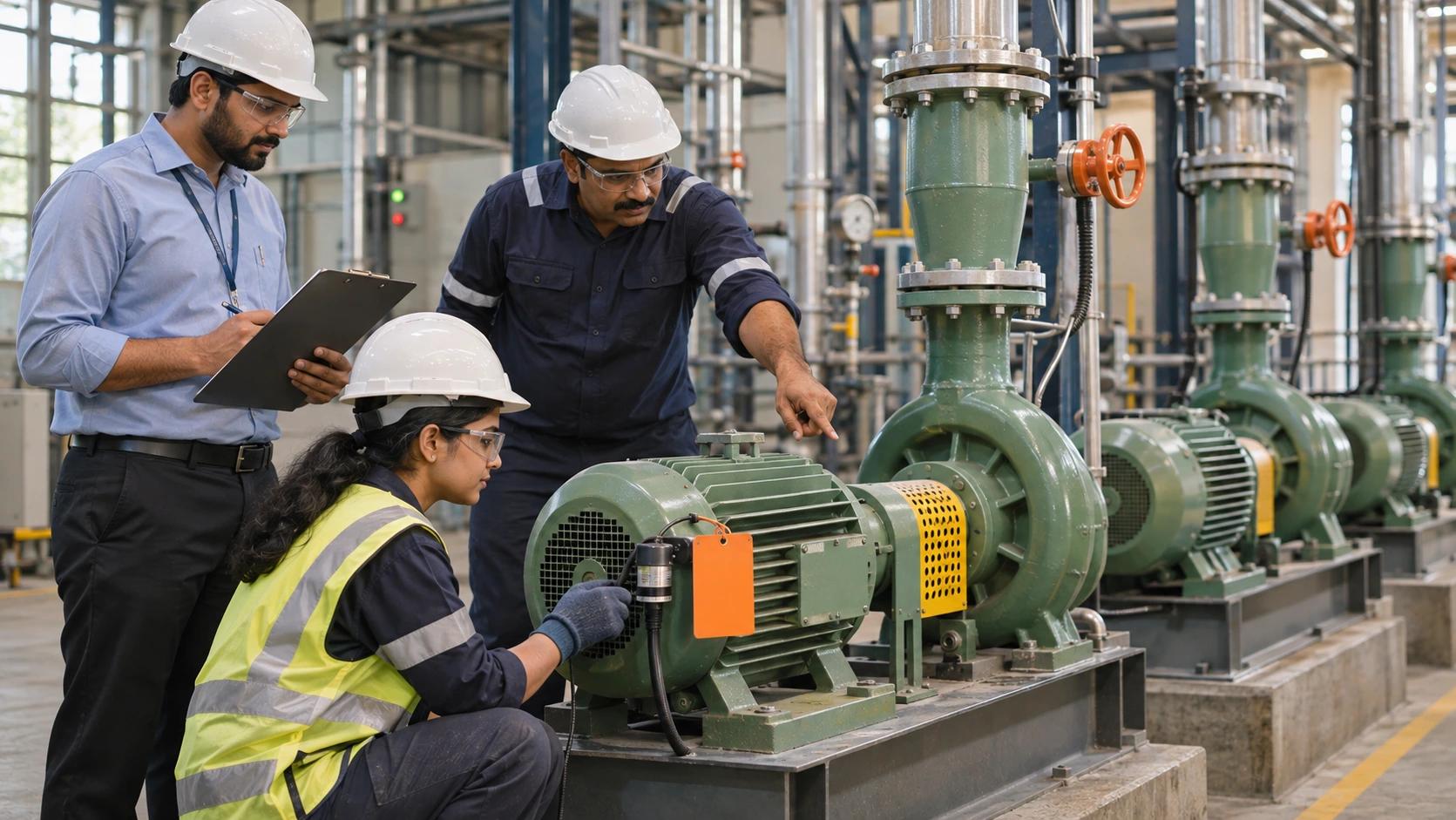
01Identify critical equipment
Start where unplanned downtime creates the greatest operational disruption—bottleneck pumps, critical motors, compressors or gearboxes with limited redundancy.
02Review available machine data
Assess existing sensors, historian tags, PLC signals, maintenance logs, failure records and data quality before choosing a modelling approach.
03Select an appropriate prediction approach
Model choice depends on equipment type, available signals, failure history and the decision the plant needs—anomaly alerts, fault classification or RUL-style planning horizons.
04Pilot, validate and improve
Test alerts against inspections and repairs, involve maintenance engineers in reviewing false alarms and missed events, and refine thresholds before wider rollout.
Questions from industrial and maintenance teams
Frequently asked questions about predictive maintenance
What is predictive maintenance in machine learning?
It is the use of machine learning on equipment condition data to estimate failure risk or remaining useful life and support earlier maintenance decisions. Models learn from historical and live signals; engineers remain responsible for validation and action.
What sensors are used for predictive maintenance?
Common inputs include vibration, temperature, acoustic, motor current, pressure, flow, speed and operating-hour data. Some approaches also analyse electrical supply signals. The right mix depends on the asset and the failure modes that matter.
How does AI predict machine failure?
Algorithms compare current behaviour with historical patterns, detect anomalies or classify known fault signatures, and may estimate remaining useful life. Predictions are probabilistic risk estimates based on available data, not certainties.
What is the difference between predictive and preventive maintenance?
Preventive maintenance follows fixed intervals or operating hours. Predictive maintenance adjusts timing based on observed condition and estimated risk when data quality is sufficient.
What is Remaining Useful Life (RUL) prediction?
RUL prediction estimates how long equipment may continue operating before a defined failure or end-of-life condition, based on degradation patterns in the data. It supports planning; it is not a guaranteed calendar date.
Can predictive maintenance work with existing industrial equipment?
Often yes, especially where historians, PLC tags or electrical signals already exist. New sensors may still be needed for some assets. Feasibility depends on data access, asset criticality and whether maintenance workflows can receive and act on recommendations.
Explore how AI can support smarter industrial operations
Turn operational data into better maintenance decisions.
Explore how DEQX applies machine learning and predictive analytics to identify patterns, assess potential risks and connect model outputs to practical business decisions.
Machine Learning & Predictive AnalyticsContinue exploring
Plan AI around the workflows your teams already use.
Predictive systems are most useful when they connect to clear owners, approvals and everyday applications—not when they remain a separate dashboard.
Explore AI TransformationAbout this article
An illustrated industrial perspective.
This article explains general predictive maintenance concepts, published research and industry examples. It is not a claim that DEQX offers a ready-made predictive maintenance platform, industrial sensor product or measured customer deployment results. Machine learning identifies patterns and estimates risk from available data; maintenance engineers remain responsible for validating recommendations and approving interventions.
More Recent Insights
Stay up-to-date with our latest findings and perspectives.

Legacy System Modernization: How to Upgrade Old Business Software Without Disrupting Operations
Learn how to modernise legacy business software in stages, map system dependencies, improve integrations and protect essential operations without replacing everything at once.

B2B Ordering Portals: Replacing WhatsApp and Excel Orders for Distributors
How distributors can move dealer orders out of chat threads and spreadsheets into one ordering system, while keeping WhatsApp for the conversations dealers value.

AI Receptionist for Clinics: Turning Every Patient Call into a Confirmed Next Step
How an AI receptionist books, reschedules and reminds patients for clinics, with Malayalam–English calls and staff handoffs.